Real Estate & Rentals
Free Commercial Lease Agreement Template (PDF)
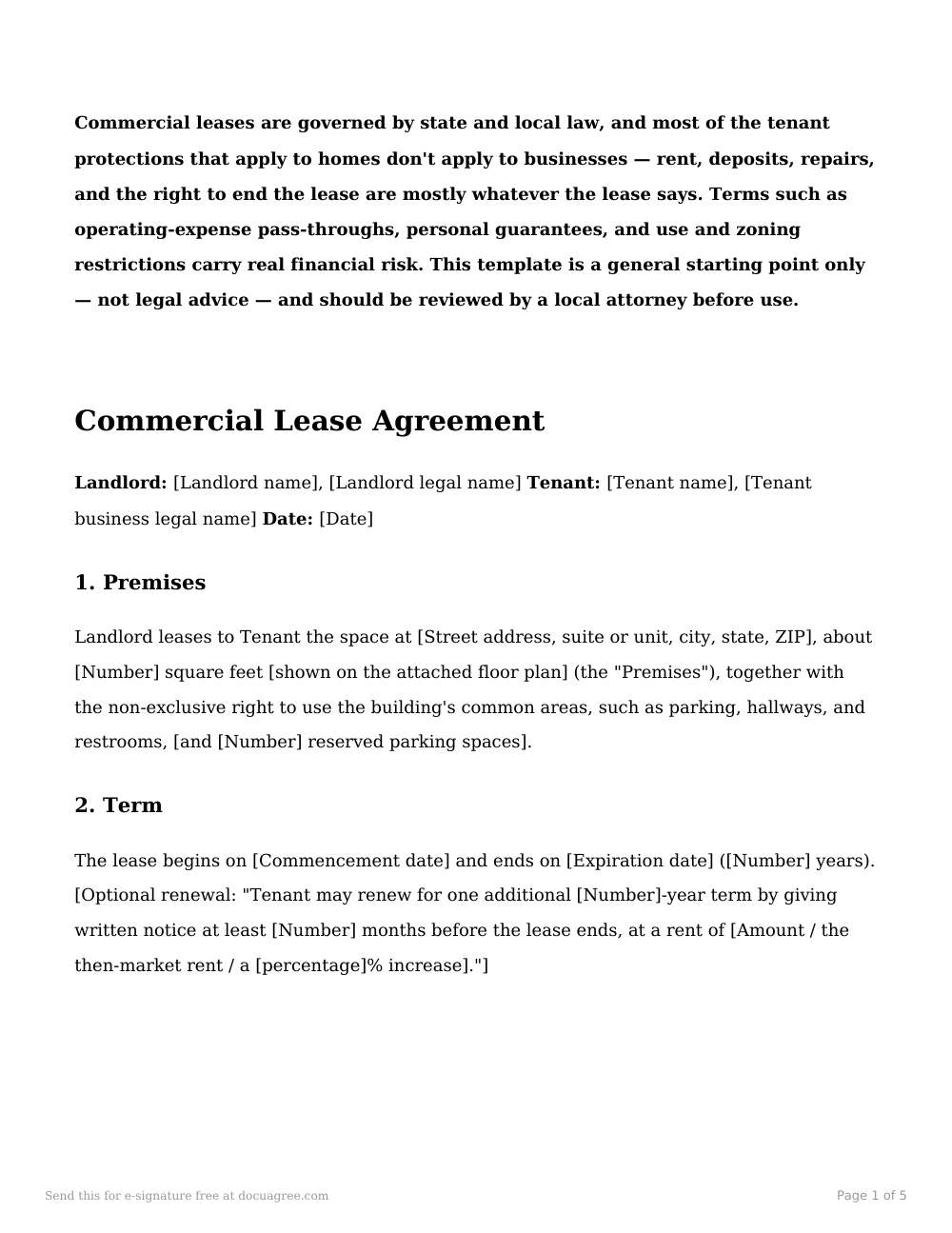
A commercial lease is the contract between a landlord and a business tenant for office, retail, or light-industrial space. It sets the premises, term and renewal, base rent and increases, how operating expenses are shared, the permitted use, who repairs what, insurance, assignment, default, and any personal guarantee.
Download the template
Free, no signup required. Fill in the blanks by hand, or use it below to fill and send for signature.
When to use it
Use it for a small business leasing a single office, shop, studio, or warehouse unit directly from the owner. Commercial leases have far fewer legal protections than residential ones, so the lease itself decides most things, especially the costs beyond base rent. For a large space, a multi-tenant shopping center, or a long build-out, have a lawyer draft or review the lease.
What's typically included
- Landlord, tenant business, and date
- Premises, square footage, and common areas
- Term and optional renewal
- Base rent, annual increases, and late fee
- Gross lease or operating-expense pass-through with yearly reconciliation
- Security deposit
- Permitted use, zoning, and licenses
- Utilities
- Who repairs the structure, systems, and interior
- Alterations, signs, and removal at move-out
- Insurance, additional insured, and indemnity
- Assignment and subletting
- Default, notice, and cure periods
- Optional personal guarantee
- Ending the lease, notices, and governing law
- Signature blocks for landlord and tenant
How to fill it in
- Decide between a gross lease (rent includes taxes, insurance, and maintenance) and passing operating expenses through to the tenant. If you pass them through, the tenant should ask for past years' actual costs and a cap on increases.
- Describe the permitted use specifically, and confirm zoning allows it before signing. It's the tenant's risk under this template.
- Be clear about HVAC: whether the landlord or the tenant maintains and replaces it is one of the most expensive surprises in small commercial leases.
- If the landlord asks for a personal guarantee, negotiate a dollar cap or a time limit, since it puts the owner's personal assets at risk.
Commercial leases are governed by state and local law, and most of the tenant protections that apply to homes don't apply to businesses — rent, deposits, repairs, and the right to end the lease are mostly whatever the lease says. Terms such as operating-expense pass-throughs, personal guarantees, and use and zoning restrictions carry real financial risk. This template is a general starting point only — not legal advice — and should be reviewed by a local attorney before use.
Frequently asked questions
How is a commercial lease different from a residential lease?
Most tenant-protection laws, like caps on security deposits, required repairs, and limits on eviction, are written for homes and don't apply to businesses. In a commercial lease, rent increases, repairs, deposits, and ending the lease are mostly whatever the lease says, so negotiating the terms matters much more.
What are operating expenses or CAM charges?
They're the building's costs for property taxes, insurance, and common-area maintenance (CAM). In a net lease, the tenant pays its share on top of base rent, usually as a monthly estimate reconciled against actual costs each year. They can be large and change from year to year.
Should I sign a personal guarantee on a commercial lease?
Many landlords ask for one from a small or new business. It makes you personally responsible if the business can't pay. If you agree, try to limit it to a dollar amount or the first year or two of the lease.
Can a commercial lease be signed electronically?
Yes. Under the U.S. ESIGN Act and state UETA laws, an e-signed commercial lease is as valid as a paper one. A separate memorandum of lease that you want recorded with the county may need to be notarized.
Ready to use this template?
Every word is editable before you send — this is a starting point, not a final draft.