Confidentiality & Legal
Free Letter of Intent Template (PDF)
A letter of intent (LOI) is a short document that sets out the main terms two parties intend to negotiate for a deal, such as buying a business, leasing space, or forming a partnership, before they sign a full contract. It's mostly non-binding, with a few specific provisions that are binding.
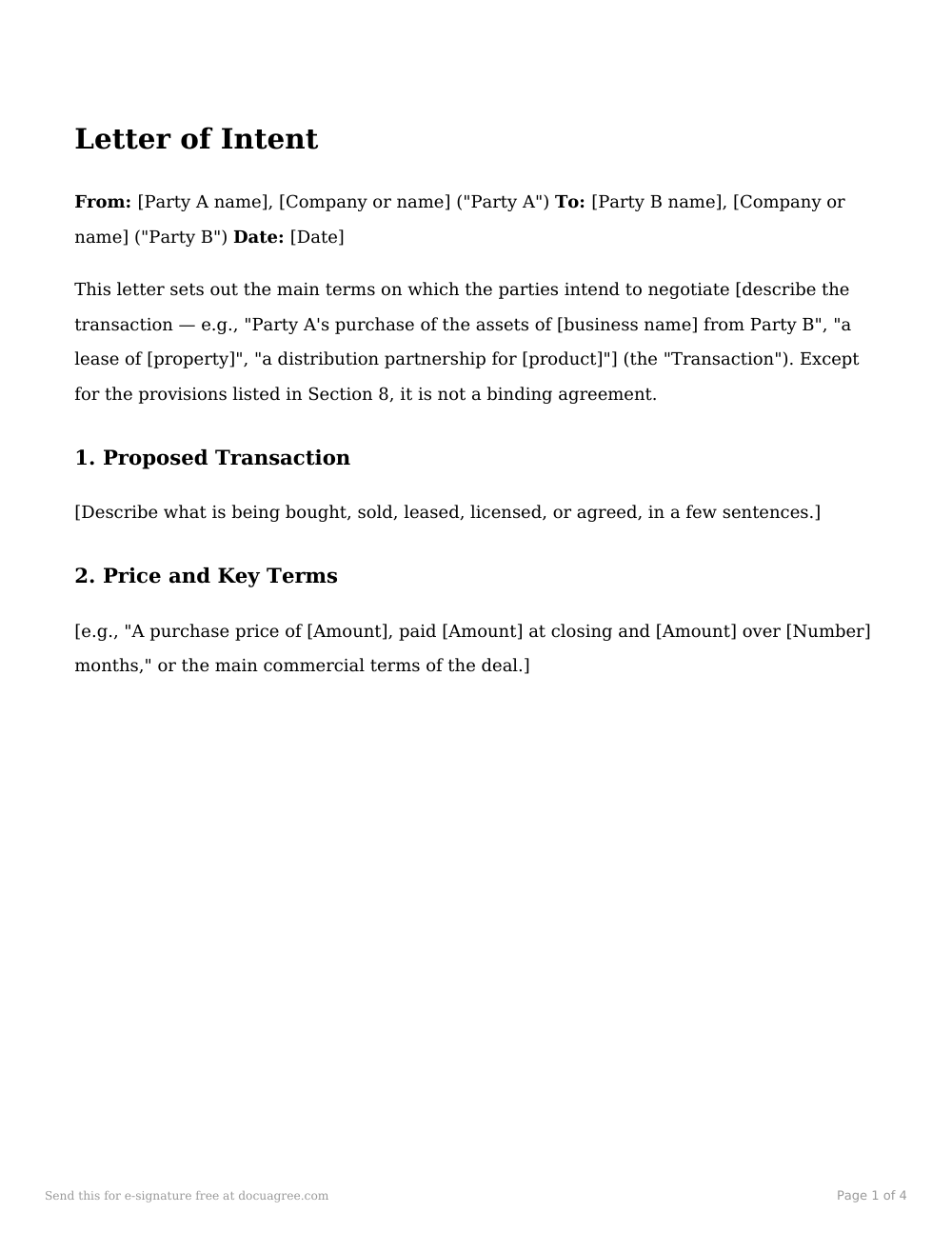
Download the template
Free, no signup required. Fill in the blanks by hand, or use it below to fill and send for signature.
When to use it
Use a letter of intent when you've agreed on the big points of a deal and want them in writing before spending time and money on due diligence and a full contract. It's common for buying or selling a small business, commercial leases, and partnerships. The most important thing in an LOI is being clear about which parts are binding: this template makes everything non-binding except exclusivity, confidentiality, costs, and how the letter ends.
What's typically included
- Parties and date
- Description of the proposed transaction
- Price and key commercial terms
- Due diligence access and period
- Conditions to closing
- Timeline toward a definitive agreement
- Optional exclusivity (no-shop) period
- Each party pays its own costs
- A clear list of the only binding provisions
- Confidentiality
- Ending the letter and governing law
- Signature blocks for both parties
How to fill it in
- Describe the deal clearly but briefly. An LOI is a summary, not the final contract, so keep detailed terms for the definitive agreement.
- Decide whether you need exclusivity. A buyer usually wants it so the seller doesn't shop the deal during due diligence; a seller may want it short.
- Leave Section 8 as it is unless you deliberately want more provisions to be binding. Courts have enforced LOIs that weren't clear about this.
- For a significant deal, have a lawyer review the LOI before signing: its terms tend to anchor the final contract.
This template is a general starting point, not legal advice — customize it and have it reviewed for your situation.
Frequently asked questions
Is a letter of intent legally binding?
It depends on how it's written. Most LOIs are mostly non-binding, but specific provisions, like confidentiality and exclusivity, can be binding, and a court may treat an unclear LOI as a contract. This template states exactly which sections bind the parties and that nothing else obliges either side to close the deal.
What's the difference between a letter of intent and a contract?
A contract binds both parties to complete the deal on its terms. A letter of intent records the terms they intend to negotiate, so they can do due diligence and draft the contract with a shared starting point. Either party can usually walk away before the contract is signed.
What is an exclusivity or no-shop clause?
It's a binding promise, usually by the seller, not to negotiate with anyone else for a set period while the buyer does due diligence. It protects the buyer's time and costs. Keep the period realistic, often 30 to 90 days.
Can a letter of intent be signed electronically?
Yes. Under the U.S. ESIGN Act and state UETA laws, an e-signed LOI is as valid as a paper one, including its binding provisions.
Ready to use this template?
Every word is editable before you send — this is a starting point, not a final draft.